One operating record across outage, field work and evidence.
Amplyra connects outage, dispatch, switching, field logs and evidence around the same incident, so nothing is lost when work moves between teams.
Amplyra GridSteward
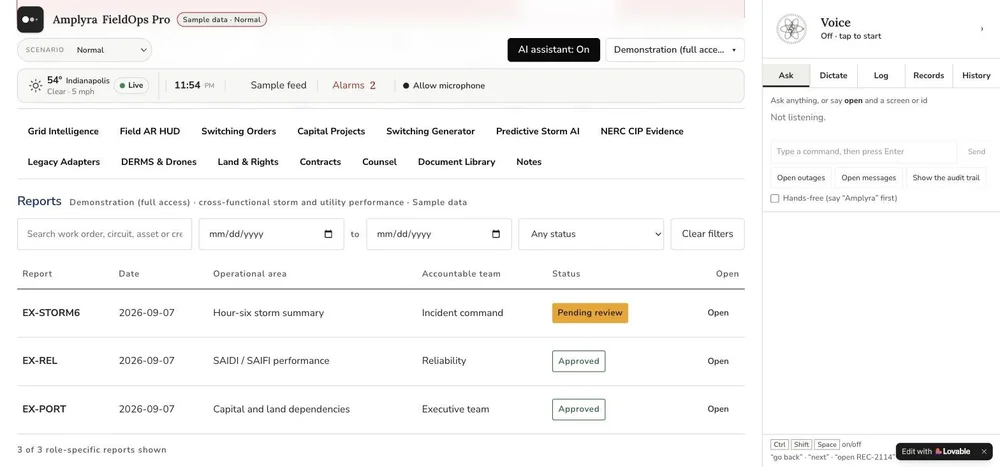
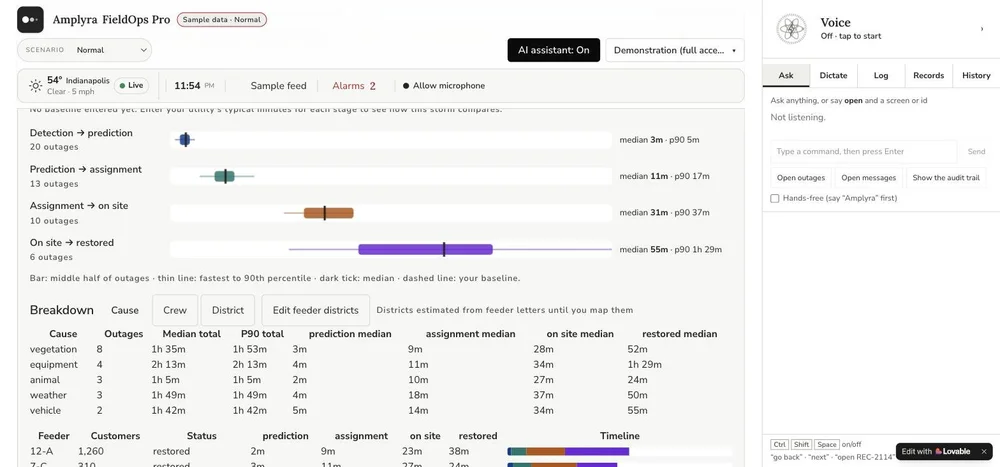
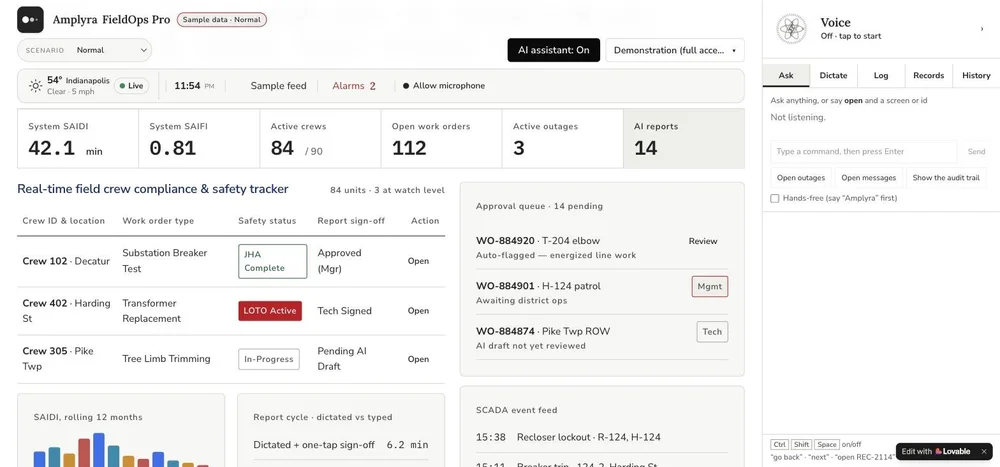
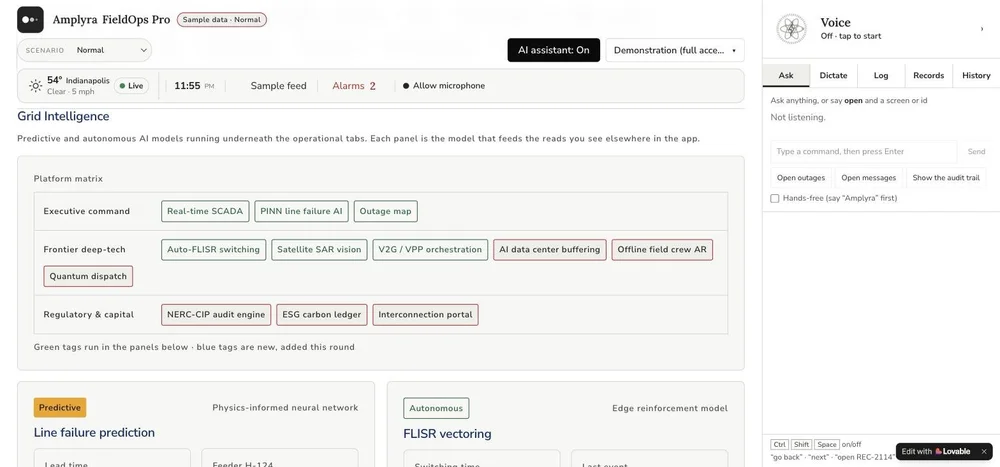
Interactive maps, scheduling, outage management, reporting, AI controls and voice dictation, shown with sample data.
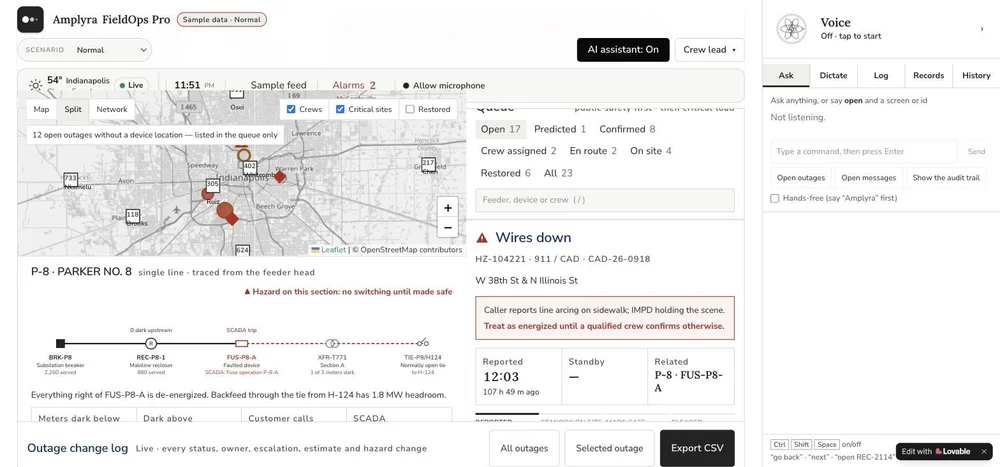
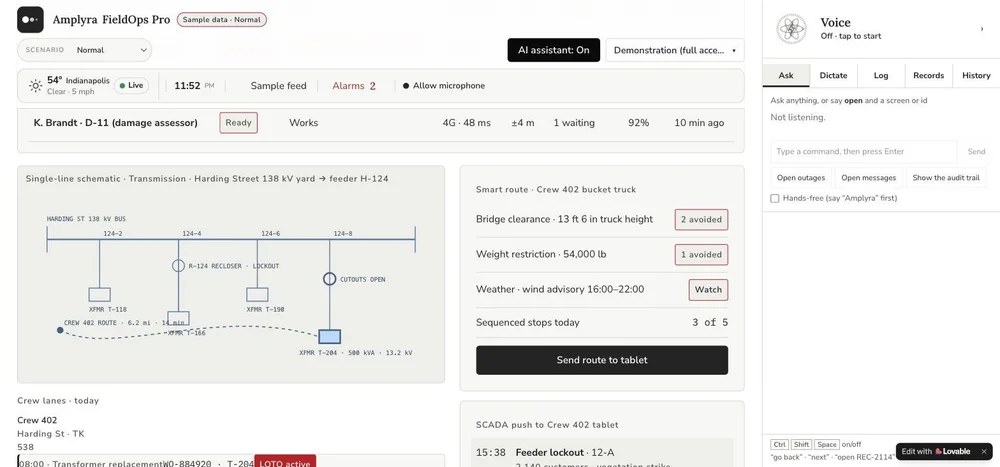
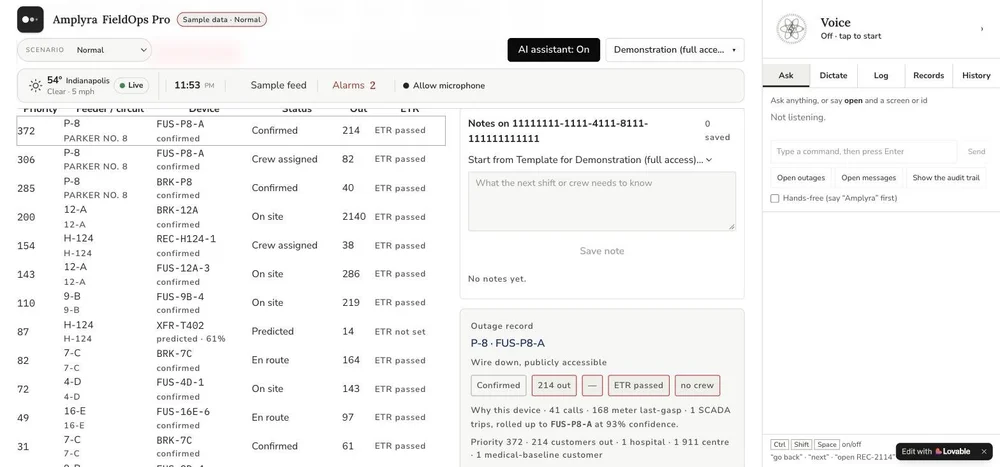
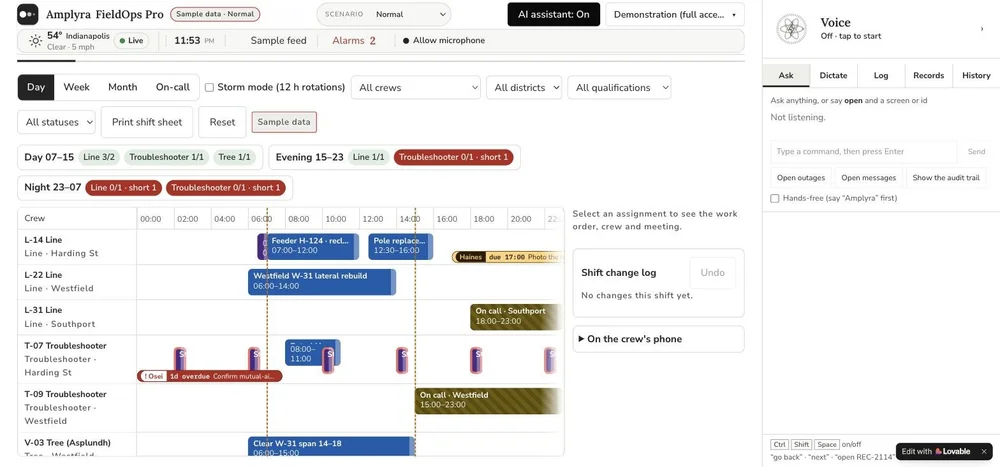
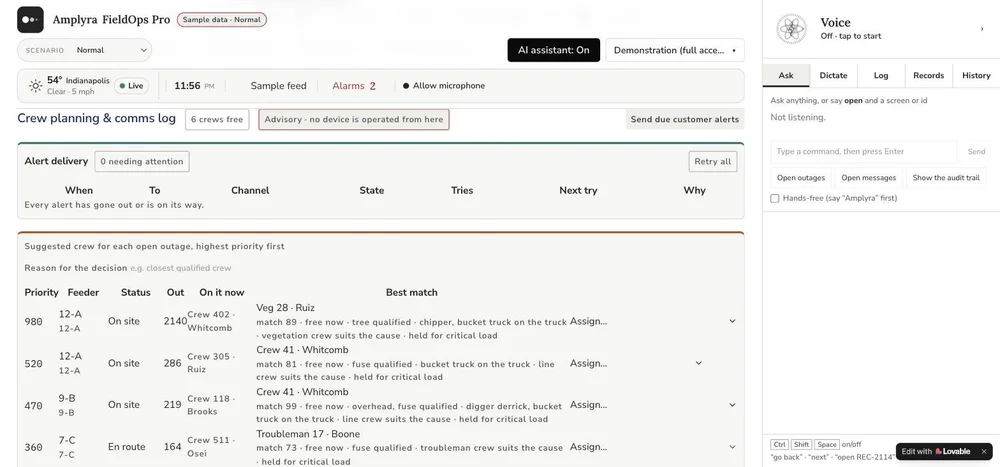
Five stages. One timeline.
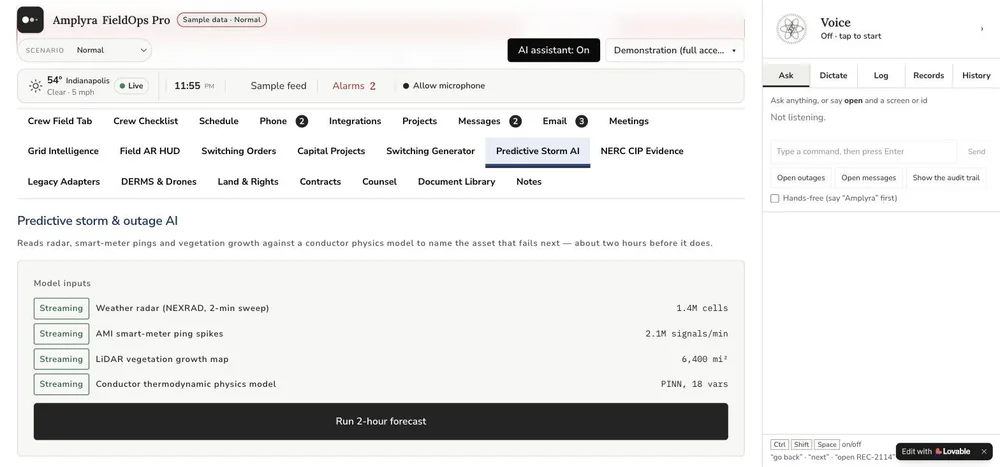
Predict
Meter and call data create an outage record.
Assign
Dispatch places crews against the same event.
Execute
Briefings, switching and field logs extend it.
Restore
Status and customer updates reflect field reports.
Evidence
Approvals and actions remain in one timeline.
Three workspaces, one record.
Outage Response
Prediction, live outage map, crew status, customer notifications, restoration estimates and IEEE 1366 indices.
Field & Safety
GIS, crew planning, briefings, checklists, switching orders with readback, photos and field logs.
Enterprise Records
Land and easements, capital stages, counsel holds, document versions, audit history and role administration.
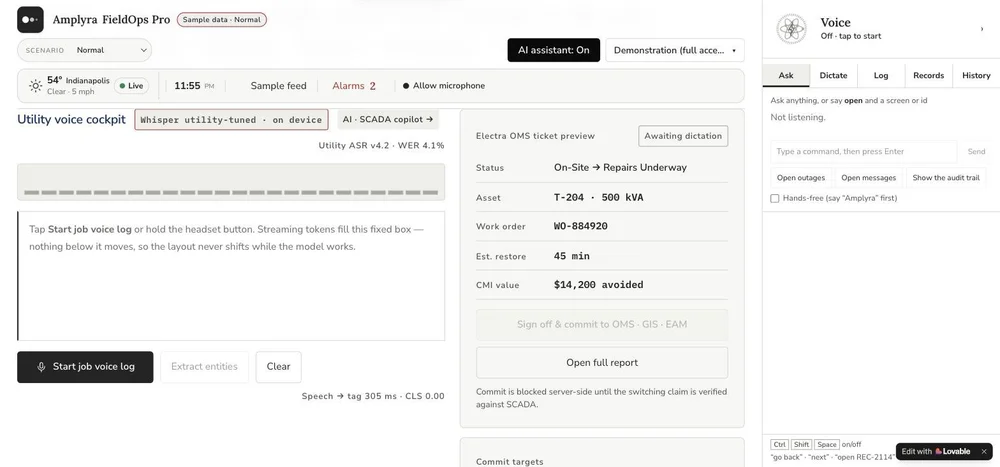
The crew's job, briefing and log follow the dispatch.
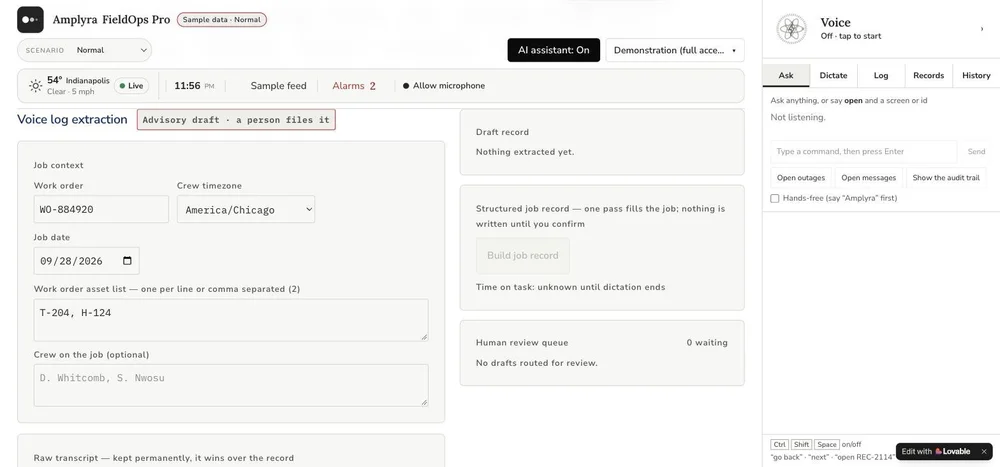
Dictate on site. Voice turns readings and observations into a structured log for review.
Confirm before sending. A voice command alone cannot create a record or send a message.
An audit trail captured as the work happens.
| Briefing | Crew sign-off and clearance |
|---|---|
| Switching | Step, readback and second-person check |
| Field work | Timestamped logs, readings and photos |
| Access | Role changes and privileged actions |
| Documents | Versions, comparisons and restoration |
Built on open utility standards.
| OMS events | MultiSpeak 5.x or IEC 61968 CIM |
|---|---|
| Identity | SAML and SCIM, with server-side role checks |
| Field links | Webhooks and mesh sync, with replay after lost connection |
| Audit & telemetry | Full event log and signed FLISR messages |
Start contained. Expand with evidence.
Weeks 1–4: read-only pilot
One district, two crews and a dispatcher. Load a storm season of history and compare with your current OMS process.
Weeks 5–12: operational pilot
Add two-way integration and SSO. Run switching in parallel with the existing process and capture evidence live.
District rollout
Expand district by district. Retire an incumbent system only after the parallel period demonstrates equivalence.
Actual schedules are set with each utility's integration, security and safety review.
Amplyra GridSteward pricing.
Scoped to your grid, not a price list. A paid pilot first, then an annual subscription. No up-front license. Pilots typically start in the low six figures.
Paid pilot
Scoped per engagement
A contained pilot on your own grid, measured against your current baseline. Cost follows the territory in scope, how many crews take part, and which systems we read from while it runs.
Subscription
Per meter, per year
Annual, scaled to your service territory. The rate moves with meter count, how many operating companies sit under one contract, and the modules you turn on.
Implementation
At our engineering rate
Integration, data migration and training. Scope depends on your OMS, GIS, SCADA and CIS estate, the condition of the data we migrate, and how many crews we train.
What sets your number
- Meter count and service territory
- Which systems we integrate with — and whether those vendors charge for access
- How your outage and switching processes actually run today
- Data migration scope and data condition
- Crew count, training and union requirements
- Rollout phasing and support level
Final pricing is confirmed after a scoping session.
Consulting rates.
Senior engineering for outage, dispatch, GIS and field-operations work, on its own or alongside Amplyra.
| Hourly | $350 |
|---|---|
| Day rate | $2,800 |
| Retainer, about 15 hrs a week | About $22,700 a month |
| Retainer, about 20 hrs a week | About $30,300 a month |
| Retainer, 10 days a month | $28,000 a month |
Scoped projects are priced by outcome. For example, an integration assessment of 8–10 days is $22,400–$28,000.